

People spend numerous hours daily on the internet. They read, watch videos, and subscribe to brands. However, they don’t trust brands at first glance. Users stay careful because many ads are fake and make false claims. That is why storytelling builds long-term trust in the digital space.
Storytelling is more about connection than selling. It goes into detail about integrity, meaning, and virtues. Over time, this relationship becomes stronger. Because of this, users feel secure. They trust the brand. This trust promotes long-term growth and loyalty.
Why Trust Is Important in the Digital Space
All online relationships are based on trust. People will not click, buy, or follow without trust. Users in the digital space are unable to interact with brands physically. Hence, they rely on content, tone, and consistency.
Most brands do not go beyond promotion. Users desire transparency. They desire brands to talk in a good way. Trust in the digital space grows when brands explain their values openly. Digital storytelling helps spread these ideals organically. Due to this, the users are comfortable. Trust is developed and becomes long-term.
What Is Storytelling in Digital Marketing
Storytelling in digital marketing means using stories to share messages. These stories are real and simple. They may explain a brand’s journey or customer experience.
Brand storytelling gives meaning to a brand. It shows why the brand exists. Storytelling for brands creates emotional connection. Instead of sounding like ads, brands sound human. Therefore, users listen more. They understand the brand better. This understanding builds trust and long-term engagement.
How Storytelling Builds Trust Online?
Individuals remember stories more than facts. This is due to the fact that stories bring emotions. Emotions build connection. Connection builds trust.
How storytelling builds trust online. Stories show hard work, honesty, and care. Users are recognized through authentic brand storytelling. They feel valued. As a result, they gain permanence and return. Trust develops over a long period of time.
Emotional Connection Through Digital Storytelling
Emotion drives human decisions. Digital storytelling creates emotional bonds between brands and users.
Stories help users feel:
- Understood
- Valued
- Confident
When users feel connected, they engage more. They read more. They share more. This improves user engagement. In addition, emotional connection supports storytelling to build brand trust. People trust brands that respect their feelings and needs.

Brand Authenticity and Transparency
Honesty matters online. Users can sense fake messages quickly. Therefore, brand authenticity is essential.
Real stories include challenges and growth. They include lessons and progress. This honesty supports digital storytelling for brand credibility. Transparent brands earn respect. As a result, storytelling strategy for trust building becomes reliable and effective.
Consistency Builds Long-Term Trust
Trust needs time. It does not appear in one post. Instead, it grows through consistent effort.
How brands use storytelling to gain trust depends on repetition. When the same values appear across platforms, users feel stability. This builds strong brand identity. Over time, users believe the brand message. Therefore, trust becomes long-term.
User Stories and Social Proof
Customer stories are powerful. They show real experiences and real results.
People trust other users more than ads. Because of this, reviews and testimonials matter. These stories improve customer experience. They also increase credibility and loyalty. Moreover, they support content marketing storytelling and reduce doubt.
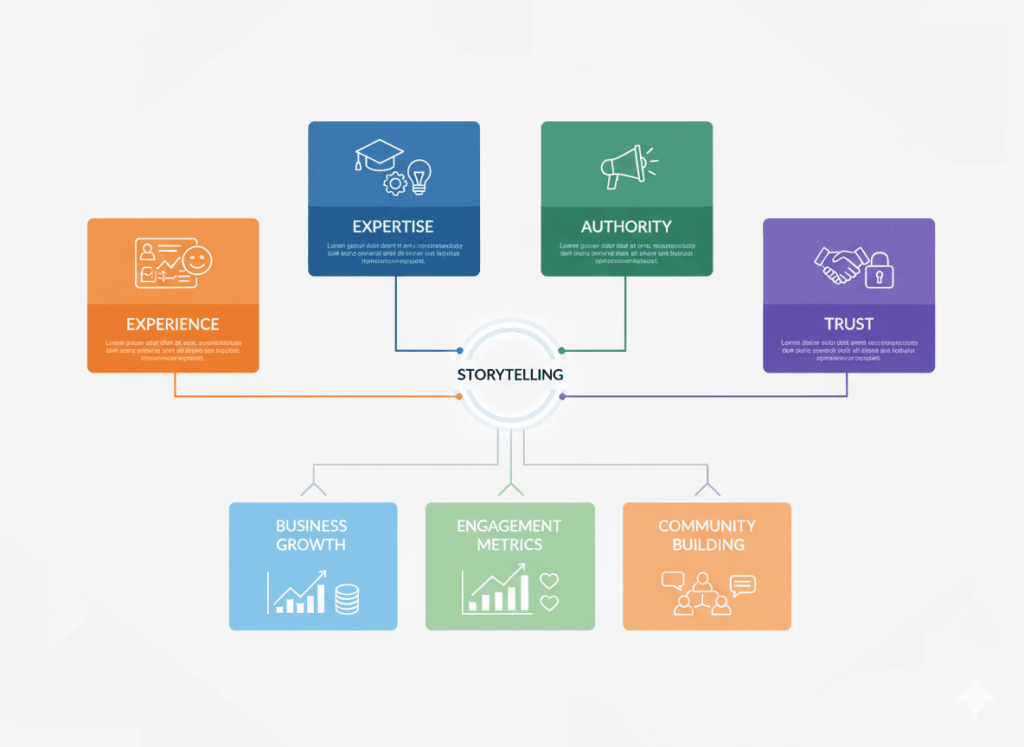
Storytelling and EEAT Principles
Storytelling supports EEAT clearly.
- Experience comes from real stories
- Expertise comes from insights
- Authority comes from consistency
- Trust comes from transparency
Search engines value helpful content. Stories add depth and meaning. Therefore, storytelling in online marketing helps SEO and user trust together.
Why Storytelling Supports Long-Term Business Growth
Short-term ads bring quick attention. However, they fade fast. Stories stay longer.
Storytelling for business growth focuses on relationships. Brands that tell stories build communities. These communities support and promote the brand. As a result, a storytelling marketing strategy creates sustainable success.
Future of Storytelling in the Digital Space
Technology will change. Platforms will evolve. However, human emotions remain the same.
As automation grows, humanizing digital brands becomes more important. Brands that invest in stories will stand out. Therefore, they can increase brand trust online and stay relevant for years.
FAQs
Storytelling fosters trust because it is an emotional, experience- and value-based approach. The users can connect emotionally due to the fact that they feel valued and valued. Such emotional attachment would, in the long run, create confidence and long-term trust.
There is honesty and transparency in storytelling. Brands become human by telling true stories of hardships and development. The users will think more about the message and have more confidence in the brand.
Yes. Storytelling promotes user experience, engages, and generates loyalty. It is also conducive to EEAT principles that contribute to both search engine publicity and long-term user confidence.
Real-life stories, brand experiences, and customer testimonials are ideal. These narratives are relatable, less doubtful, and provide evidence to support credibility and trust.
Yes. Telling stories fosters positive relationships and loyal communities. Such relations help achieve long-term success and sustainable development instead of short-term advertisement work.
Conclusion
Storytelling develops emotional attachment, sincerity, and reliability that build long-term credibility in the digital zone. When users share real-life stories, they are prompted to identify with brands. Because of this, communication becomes more natural and sincere. This develops into trust over the course of time. Storytelling also assists the brands in clarifying their values. mission and purpose.
Brands are relationship-oriented rather than sale-oriented. The users feel that they are respected and understood. Also, when people see the same message often, they feel more comfortable. It feels familiar. This makes them trust it more. In the sea of digital ads that consumers see every day, storytelling can help brands stand out. In the long run, storytelling fosters trust, loyalty, engagement, and sustainable business growth.