
Introduction
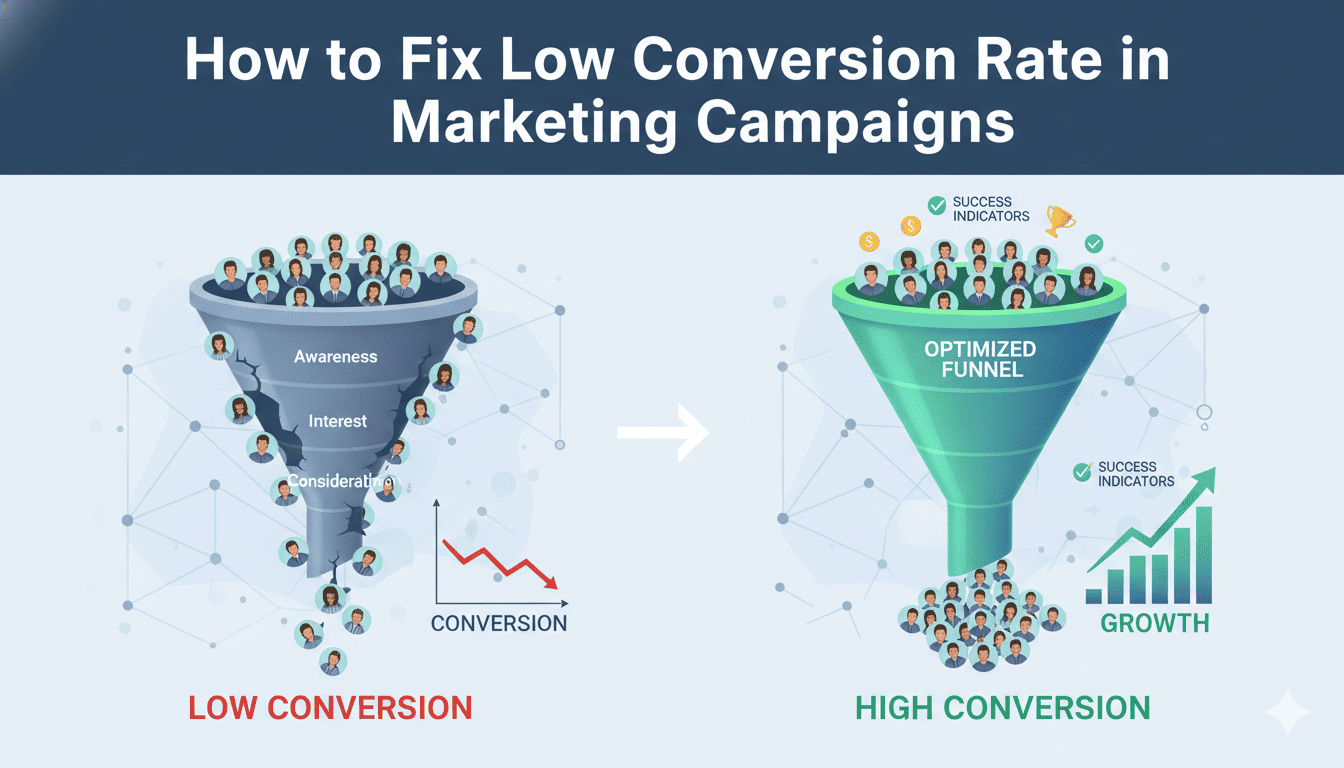
Traffic is not the actual issue. A lot of businesses already have visitors visiting their site. That’s where the real problems begin. People click. They browse. Then they leave. No inquiry. Then No purchase. No action. This is a demonstration of what a low conversion rate does.
It can feel frustrating. You spend on advertising, content, and campaigns with lackluster results. The good news is simple. Low conversion is not random. There is a reason behind it and its always behind it. There are often small gaps in the customer journey that result in significant losses as far as results go, which is something here at Digitix Marketing we see repeatedly.
Let’s unpack what happens and how to practically fix the problem.
What Does a Low Conversion Rate Actually Mean?
A conversion is when a visitor acts. This may include filling out a form, scheduling a call, or purchasing something. People visit, but they don’t do anything: your conversion rate decreases.
You have a problem with conversion; common symptoms:
- A well-read blog but no leads
- People leaving the site quickly
- Lots of clicks on ads and no conversions
- Low engagement on landing pages
Usually this means something isn’t right in your process.
You’re Getting the Wrong People Interested
Most campaigns don’t even make it to the website; failure happens long before that. If you target incorrectly, you have people who are not interested in your offer.
Where this goes wrong:
- Broad keywords in ads
- Poor audience targeting
- Misleading ad copy
- Content Designed to Attract the Wrong Users
For instance, a business that is selling premium services will inevitably attract users who are looking for cheap alternatives. These visitors will not convert.
How to fix it:
- Use specific keywords
- Define your ideal customer clearly
- Align ads with real offers
- Prioritize Intent Over Traffic
Digitix Marketing believes in pulling the right audience first. Without this step, nothing else works.
Your Landing Page Is Weak
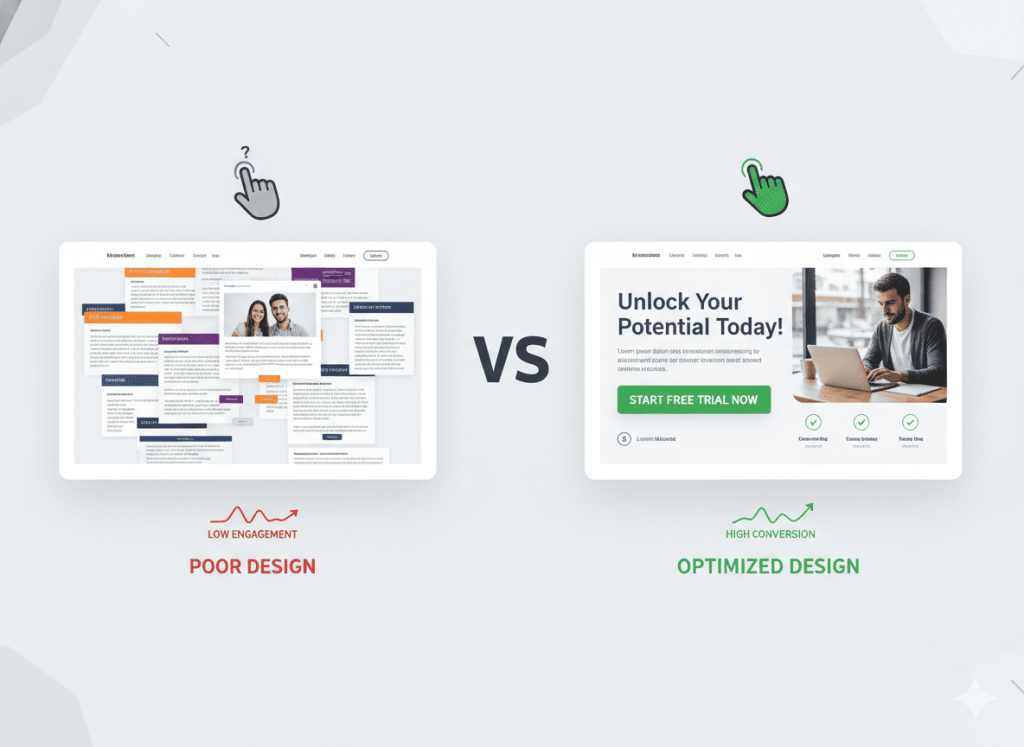
A visitor makes up her mind within seconds whether to stay or go. If your landing page comes off as confusing or unclear, they will bounce.
Signs of a weak landing page
- No clear headline
- Too much text without structure
- No clear next step
- Poor design or layout
Your visitors should instantly know what you provide and what to do next. What improves conversions:
- A strong, clear headline
- Short and focused content
- One clear call-to-action
- Clean and simple design
A strong call-to-action like “Book a Free Consultation” will outperform a generic one such as “Learn More.” Digitix Marketing designs landing pages that smoothly direct users towards a specific action without any confusion.
Your Offer Is Not Strong Enough
The design is not always the issue. It is the offer itself. Everyone asks one thing: “Why should I pick this?” If the answer is unclear, they walk away.
Weak offer examples:
- No clear benefit
- Generic service description
- No urgency or incentive
How to improve your offer:
- Highlight real value
- Show clear outcomes
- Include trust factors such as reviews or case studies
- Offer something immediate (free audit, consultation, guide)
A strong offer reduces hesitation. Digitix Marketing positions business offers in the clearest way possible so users feel confident in taking action.
Your Website Loads Too Slowly
Speed is more important than most businesses realize. When people visit your website, if it takes too much time to load, they will quit before seeing even a single piece of content from you. Common speed issues:
- Heavy images
- Poor hosting
- Too many scripts
- Unoptimized pages
And even a slight delay of a few seconds could decrease conversions. Simple improvements:
- Compress images
- Use faster hosting
- Reduce unnecessary elements
- Optimize mobile performance
Digitix Marketing helps websites to load much faster and with smooth performance.
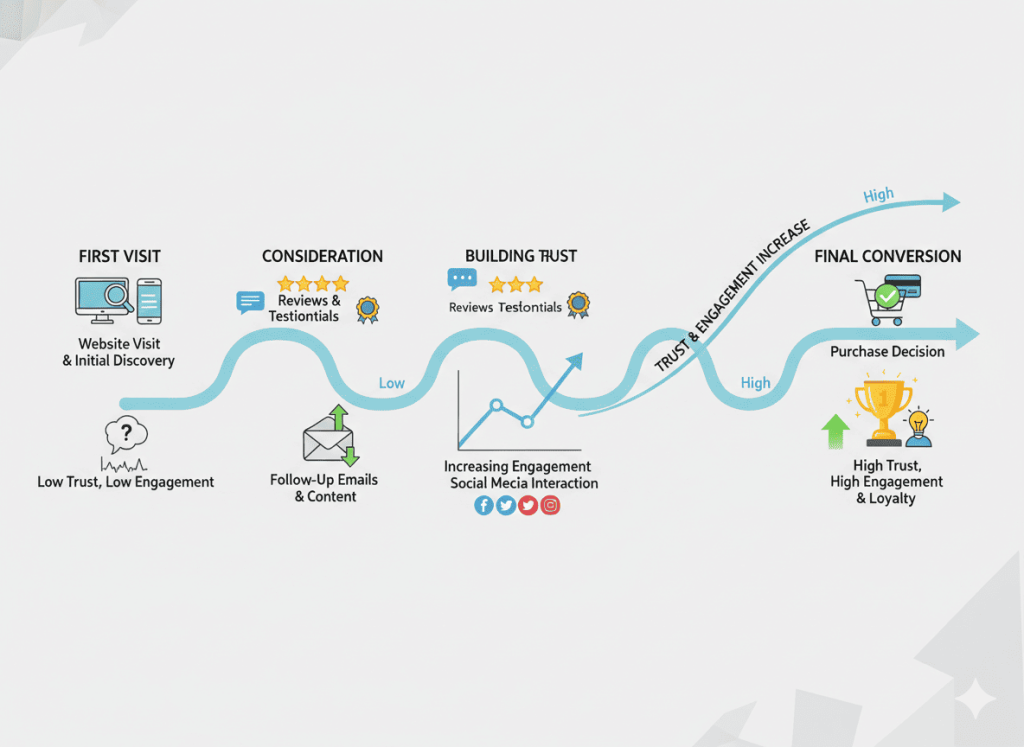
You Do Not Build Trust
If there is no trust, people don’t convert. Which is particularly relevant in service-based businesses. Signs of low trust:
- No testimonials
- No client reviews
- No clear company information
- Weak or generic content
Prospective buyers want to be reassured before they take action. How to build trust:
- Add real customer testimonials
- Show case studies
- Display contact details clearly
- Use honest and clear messaging
For instance, demonstrating an actual client outcome is more convincing than non-specific assertions. Everything you need to build trust in your websites & mobile applications by Digitix marketing.
Your Call-to-Action Is Wobbly or Unclear
This means that many businesses lost conversions because they failed to ensure their guidance. Visitors come to your website, and if they don’t know what to do next, they’ll bounce.
Common CTA mistakes:
- Too many buttons
- Vague wording
- Hidden or hard-to-find CTAs
What works better:
- One clear action per page
- Direct Words (Request a Quote, Book Now, Get Started)
- Visible placement
A strong call-to-action removes doubt. At Digitix Marketing, we focus on clear paths that a user can take to conversion.
You Are Not Following Up With Leads
Not every visitor converts immediately. Some need time. Some need reminders. With zero follow-up, you lose leads. Where businesses fail:
- No email follow-up
- No remarketing ads
- No lead nurturing process
How to fix it
- Set up email automation
- Use retargeting ads
- Follow up with helpful information.
For instance, sending a follow-up email that includes helpful information can retrieve a lead. Digitix Marketing creates follow-up systems to get your brand in front of potential customers.
Not Testing or Improving
Most companies run campaigns and never touch them. This is a mistake. Marketing needs continuous improvement. What should be tested:
- Headlines
- Ad copy
- Landing page design
- CTA placement
- Offers
Even tiny changes can lead to better outcomes. A good example would be to change a headline that might convert better without affecting the traffic. Enhanced campaigns based on real data per the constant tests by Digitix Marketing
How Digitix Marketing Fixes Low Conversion Rate
Consequently, this brings us to the question, how does Digitix Marketing fix low conversion rates? Low conversion is not a single problem. It’s a series of little things. Fixing the full journey is a focus for Digitix Marketing.
What we do
- Analyze traffic quality
- Improve landing page performance
- Strengthen offers
- Optimize user experience
- Build follow-up systems
- Track and improve results
We examine all the pieces, not just one segment. Our goal is simple. Translate visitors to actual business outcomes.
Conclusion
A low conversion rate does not mean that the end. It is a signal. It indicates what needs improvement in your marketing. Real results come when you solve the targeting, optimize your landing pages, craft a more sticky offer, and clear up your user journey. Traffic isn’t always a growth lever. Often, it requires better conversion.
Digitix Marketing was able to identify what is preventing businesses from achieving their goals and build effective campaigns that convert.
FAQs
Average conversion rates vary by industry, but currently most companies aim for between 2% and 5%. Strong targeting, clear messaging, and an optimized landing page can yield higher rates.
This is typically a result of lackluster targeting, subpar landing pages, or ambiguous offers. But visitors either do not find what they are hoping to find or do not trust enough in the brand to take action.
These include a straightforward headline, clean design, bold CTA, and trust signals such as testimonials. Guide the user to one action and no more.
Yes. Users leave the site within 5 seconds if it is slow. Speedy loading pages enhance user experience and also the chances of conversions.
Digitix Marketing examines the campaigns, enhances landing pages and targeting, and constructs follow-up systems. The emphasis is on converting site visitors into leads and optimizing overall marketing performance.